Story Of Books partnered with Re:Centre and HF ArtsFest to bring the “River to river, coast to coast” event on Saturday, 8 June 2019 for the Hammersmith and Fulham Arts Festival.
Date: Saturday, 8 June 2019
Time: 10.30 am – 12.30 pm (door opens at 10.15 am)
Venue: Re:Centre, Thames Wharf, Rainville Road, Hammersmith, W6 9HA, London, UK
Nearest tube station: Hammersmith (10-min walk)
“River to river, coast to coast” was a creative dialogue and artists workshop about the waterway and the environment. Participating artists shared their discoveries at Re:Centre, a wellness centre and artists workspace situated by the riverside in Hammersmith, London.
The event inspiration came from photography projects by Mark King, Publisher, The Point and Zarina Holmes, Photographer, After The Rain, who have been documenting the seaside communities in Devonshire, UK, and Pangkor Island, Malaysia respectively, and the impact brought by water pollution.
The latest editions of The Point and After The Rain magazines were showcased at the event, alongside the books that informed the artists on their works.


At this event, Story Of Books was launched as the imprint of Studio GLUE with After The Rain as its debut publication.
More about the event here.

Some statistics about water pollution
◉ Londoners go through two million single-use plastic water bottles a day, one of the highest rates of bottled water consumption in the country. (Thames21.org.uk, September 2018)
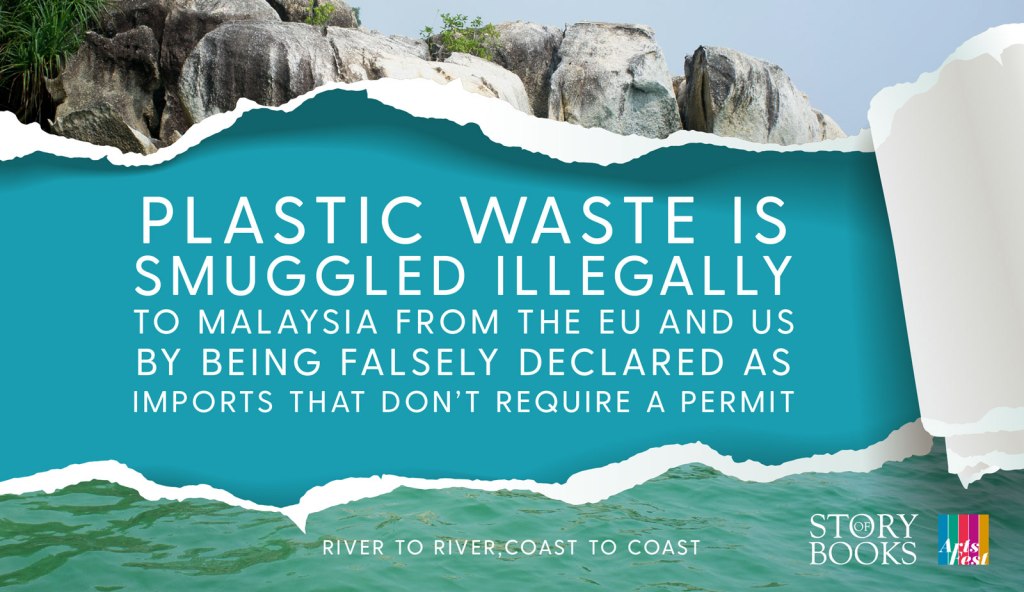
◉ Malaysia became the top destination for US plastic waste, importing more than 192,000 metric tons in the first 10 months of 2018 — a +132% jump from previous year, after China banned nearly all global plastic waste imports. Plastic waste is being illegally smuggled to Malaysia by being falsely declared as another type of imports that do not require a permit. (LA Times, December 2018; The Star, April 2019)
◉ A plastic bottle can last for 450 years in the marine environment, slowly fragmenting into smaller and smaller pieces which eventually end up microscopic but never truly go away. (Surfers Against Sewage, 2019)
◉ Studies have revealed marine plastic pollution in 100% of marine turtles, 59% of whales, 36% of seals and 40% of seabird species examined. (Surfers Against Sewage, 2019)
 Zarina Holmes